Get posts by email
Wild Edibles
June 25, 2009
Let me start off by saying you should never eat a wild plant that you can't positively identify. You could die or at the very least make yourself sick.
Having that disclaimer out of the way I want to share some of the plants I learned about at a workshop the kids and I attended last week. On a rainy afternoon (imagine that) we walked to the community garden at the end of our street to learn about weeds we can eat.
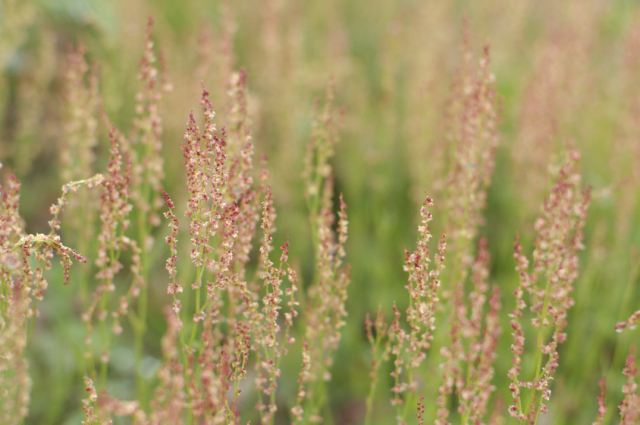
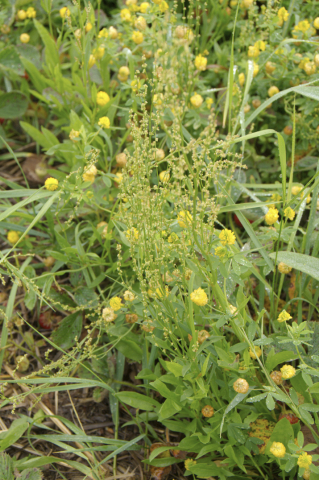
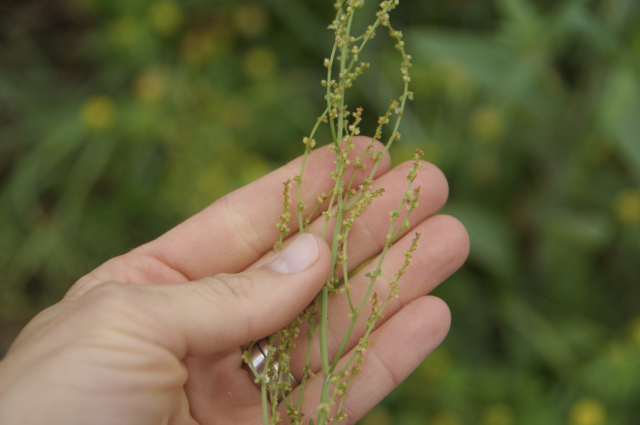
Rumex acetosella (Sheep Sorrel) flower stalk
The class was offered by our local urban agriculture and community youth organization, Lots to Gardens. We love these folks and do our best to support what they are doing in our city; helping city dwellers have better access to garden grown foods and educating & empowering young people for change.
I know a little bit about weeds that are edible, ie: young plantain leaves can be eaten as a green, and my goal is to learn more about forest and mountain edibles; knowledge I can use on our hiking and backpacking treks. This particular class was focused more on "roadside, field and meadow" type weeds. Another warning: don't wildcraft from ditches or areas that use sprays - duh.
I have seen all of these plants at one time or another, mostly at the farm (I've picked them from the fields as weeds) and some in my own backyard. I've identified each with a photo, common name, latin name and a brief description.
Purslane
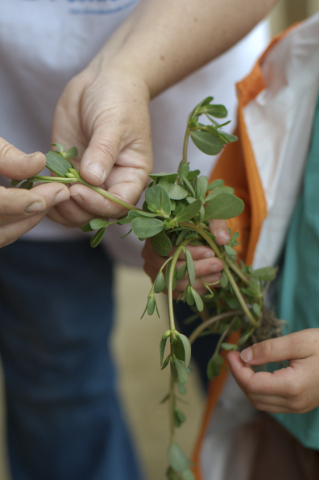
Portulaca oleracea (Purslane)
- Slightly juicy leaves, tastes good.
- Leaves & stems edible.
- Harvest June through September.
Sorrel(s)
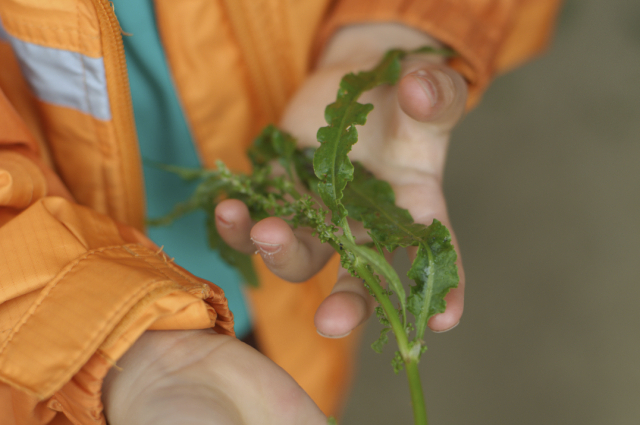
Rumex crispus (Curled Dock Sorrel)
- The texture of Curled Dock reminds me of spinach.
- Tender leaves.
- Harvest May through September.
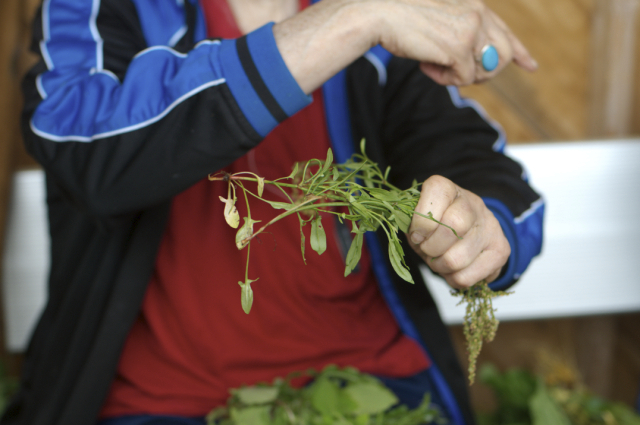
Rumex acetosella {another photo at the top of this post}
- Leaves are tender and juicy. If I recall correctly it tastes pleasantly sour.
- Harvest May through September.
- See Henriette's Herbal Homepage for more.
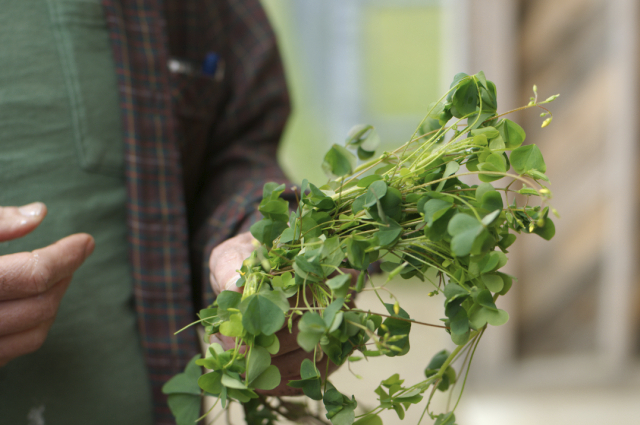
Oxalis spp. (Yellow Wood Sorrel)
- We've always called this particular sorrel chickweed. Our friends who introduced us to it called it that.
- This is a very common garden weed and I usually see it much smaller in height, like 6 inches and under with little yellow flowers. My kids love it's tart, lemony flavor and pick and eat it all summer. Apparently you should use the leaves sparingly, oops.
- Harvest all season long.
- Read more about Wood Sorrel at 5 Orange Potatoes.
Daylily
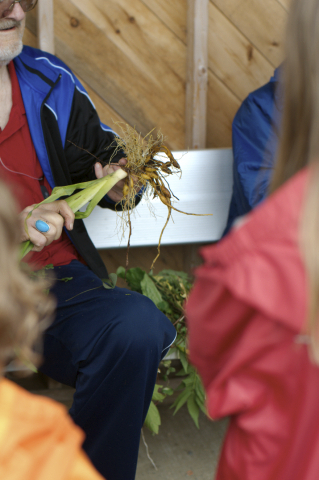
Hemerocallis fulva (Daylily)
- Daylily's are a cultivated plant but around here they grow wild as well.
- The whole plant is edible at various times of the season. The young shoots can be eaten raw or cooked but are too tough beyond 8 inches or so (April). The buds and blossoms can be eaten in their turn (July-August) and the tubers probably all season long though the source I have says August-October.
- We ate them the day of the workshop and they are crunchy, reminiscent of carrots.
Dandelion
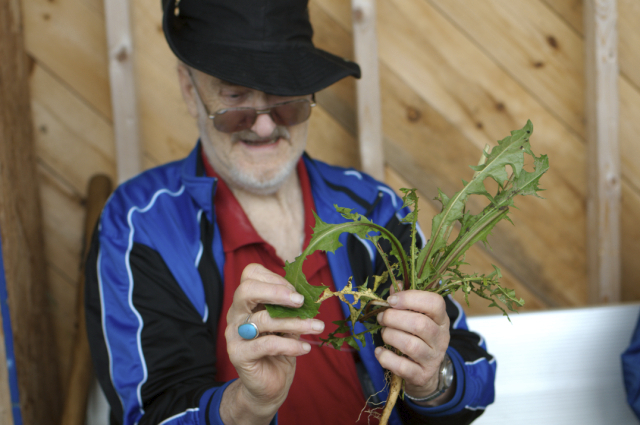
Taraxacum officinale
You knew this one was coming, right?
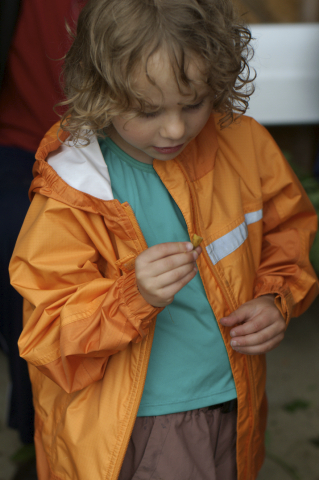
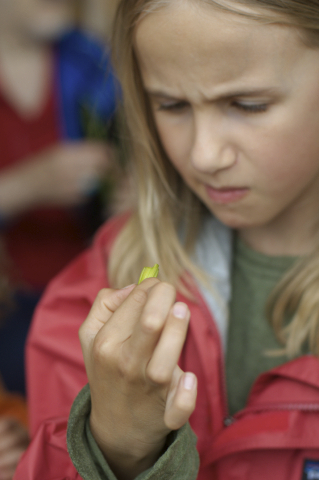
- The whole thing is edible but the roots are easiest to harvest in the spring when they aren't so long and the soil is more wet and loose.
- The greens taste the least bitter during early spring, not sure if they are "dangerous" after that time. The workshop instructor told us how he makes "coffee" with the roots. Too much work for me, but definitely cool idea.
- For dandelion blossom recipes see 5 Orange Potatoes. Lisa she did a whole series this spring. Happy Harvesting!
~~~
References & Resources
The workshop instructor recommended and shared knowledge learned from these 2 books:
- A Field Guide to Medicinal Plants and Herbs: Of Eastern and Central North America
- The Green Pharmacy Herbal Handbook: Your Everyday Reference to the Best Herbs for Healing.
For more local food talk check out Food Roots over at Nourishing Days.
Related FIMBY posts:
Post Script
I agree (as mentioned in comments), some of the above photos weren't very descriptive. Here's some more for reference.
Rumex crispus (Curled dock Sorrel): Photo taken late June while still tender and green. Later in July the seeds heads turn brown and the leaves aren't tasty to eat.
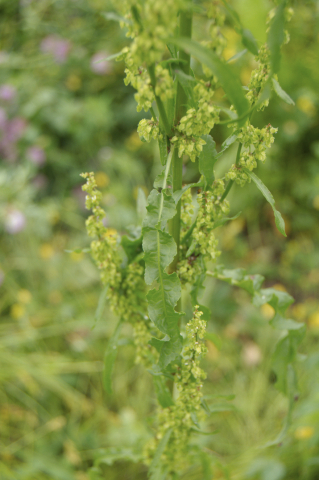
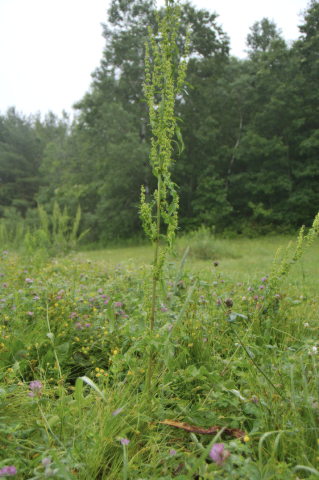
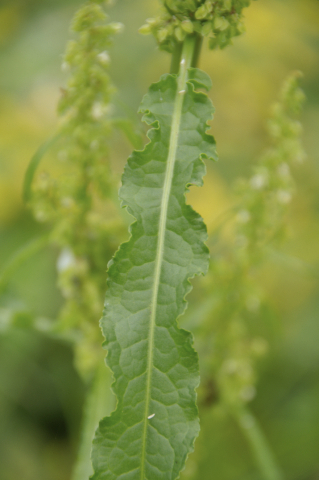
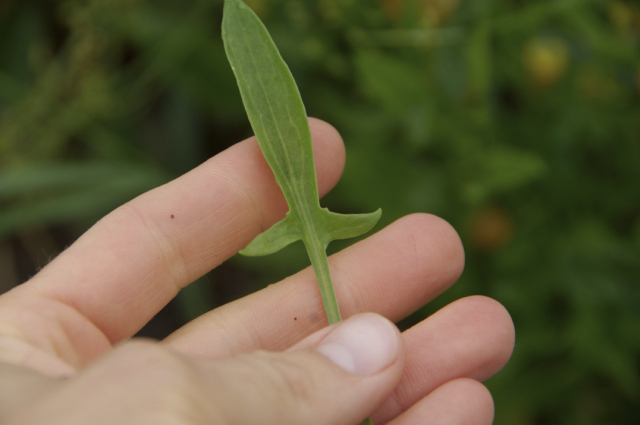
Rumex acetosella (Sorrel): Little lemony leaves.
Filed Under
Resource Library
-

Karen on June 25, 2009, 3:13 p.m.
Thank you for this article. I was particularly intrigued by the daylily information. One thing, though. While the pictures are beautiful, it is a little tough to identify the plants from the pictures.
I am definitely interested in harvesting all of the edibles that present themselves as gifts. Gifts that many call weeds.
-

renee on June 26, 2009, 1:16 a.m.
I agree! The photos weren't very good for identification but more as an "intro pic" and illustration. I'd recommend a guide book for proper ID. Thanks for visiting.
-
-

nicola on June 25, 2009, 3:32 p.m.
THANK YOU! this is a topic i am so interested in! nicola http://whichname.blogspot.com
nicola's last blog post... june: the half way point to the holidays
-

Lisa on June 25, 2009, 6:05 p.m.
Great post! Purslane is one of our favorites around here. It's just so tasty! Thanks for the mention!
Lisa ;)
-

debbie on June 25, 2009, 7:20 p.m.
Great! Chickweed ("Stellaria media" is the most common, according to Steve Brill, author of books on edible/medicinal plants) would be another weed worth finding out about - we have the yellow wood sorrel here AND chickweed (which I would imagine you have as well) - you can add it to salads and I recently came across a mention of its usefulness in getting rid of warts...though I don't care to think of those two things in the same sentence! sorry!
debbie's last blog post... The Day - June 24
-
renee on June 26, 2009, 1:20 a.m.
Warts... hum.. that's good to know. Brienne, our 6 year has warts on her hands. Something to look into.
-
-

gardenmama on June 27, 2009, 2:27 a.m.
What a great post! We also had a class we attended about edible weeds and identification. It was exciting to try so many weeds underfoot that typically may go unnoticed! Your photos and descriptions were very informative, happy to read about this. I truly enjoy foraging : )
-

Shawna on June 27, 2009, 2:41 a.m.
what a cool workshop! i myself just went weating today. pull, munch. pull, munch. pull, munch. purslane and dandelion are the only ones i'm confident with, the others i still need to identify.
Shawna's last blog post... Glowing MJ!
-

Shannon on June 29, 2009, 12:54 a.m.
I love this! We have been finding all sorts of edibles in our backyard since I started learning about them. Purslane is something I have been wanting to find but since I am not entirely sure on what is what I have been cautious. We may grow it next year due to the omega 3 content.
Thanks so much for participating in Food Roots. I hope to see you back there again soon!
Shannon's last blog post... Preparing for a Nourishing Tomorrow ? Part I: An Introduction
-
renee on June 29, 2009, 11:02 a.m.
Omega 3's in purslane? I never knew! Thanks for sharing. I haven't been able to find it "in the wild" either.
-
-

Anonymous on Oct. 19, 2009, 9:15 p.m.
youve accidentally written the common name for plantain plantago major where you have a picture of purslane.... which is most likely Portulaca oleracea.
-
renee on Oct. 20, 2009, 2:45 a.m.
whoopsies... I was going off the information given me at the session but you're right and I should of caught that. I will fix that up.
-
You can subscribe to comments on this article using this form.
If you have already commented on this article, you do not need to do this, as you were automatically subscribed.







Amy on June 25, 2009, 2:16 p.m.
This was fascinating! I'm glad I found you through Nourishing Days. I've wanted to learn more about foraging! Thanks for sharing.
Amy's last blog post... Food, Inc